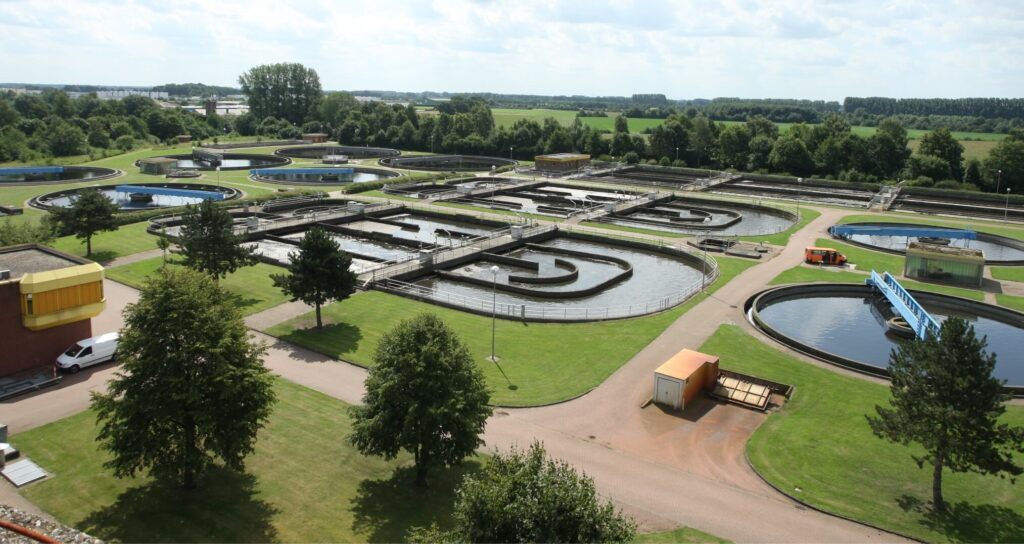
German wastewater treatment legislation is globally recognized and considered one of the most stringent and technically advanced systems. It is structured into two primary levels:
- Legislative Framework – Federal laws and ordinances.
- Technical Regulations – Engineering and design standards
Legislative Framework
The uniqueness of the German approach lies in the principle of “State of the Art (Stand der Technik).” This means that the law requires the use of the best available technologies. This system operates on three levels:
I. Legislation: WHG
The Federal Water Act (WHG) establishes the obligation; for instance, according to Section 57 of the WHG, a permit to discharge wastewater into water bodies is granted only if the quantity of pollutants is reduced to a level determined by “State of the Art” principles.
II. Legislation: AbwV
The Wastewater Ordinance (AbwV) defines the limit values. Annex 1 of the ordinance specifies the minimum requirements for municipal wastewater. The ordinance classifies wastewater treatment plants (WWTPs) into five “size categories.”
| WWTP size Category | Plant Size (PE) – Population Equivalent | Chemical Oxygen Demand (mg/l) | Biochemical Oxygen Demand (mg/l) | Ammonium Nitrogen (mg/l) | Total Nitrogen (mg/l) | Total Phosphorus (mg/l) |
| 1 | < 1,000 | 150 | 40 | – | – | – |
| 2 | 1,000 – 5,000 | 110 | 25 | – | – | – |
| 3 | 5,000 – 10,000 | 90 | 20 | – | – | – |
| 4 | 10,000 – 100,000 | 90 | 20 | 10 | 18 | 2.0 |
| 5 | >100,000 | 75 | 15 | 10 | 13 | 1.0 |
Technical Note: 12°C is the minimum water temperature required for the effective functioning of processes within the biological reactor that ensure the removal of nitrogen and phosphorus and compliance with the technical standards specified in the table.
Best Available Techniques (BAT) Principle: Best Available Techniques (BAT) have legislative force and represent the binding principle between the law and technical standards. Stand der Technik relies on European BREF (BAT Reference) documents, which describe the world’s best engineering practices for every industry. Consequently, if a better technology emerges on the market, it automatically becomes Stand der Technik, and the law begins requiring this new standard for all new projects.
German Engineering Standards for Wastewater Systems
III. Technical Regulations: VDI and DIN
The guidelines of the Association of German Engineers (VDI) and DIN standards represent the technical norms that serve to fulfill legally established requirements. VDI focuses on engineering process management guidelines, while DIN is oriented toward the standardization of equipment, materials, and analytical methods. These documents ensure the fulfillment of obligations imposed by legislation, although they do not constitute laws themselves.
One of the most important standards concerning wastewater is DIN EN ISO 7027, which establishes methods for measuring water turbidity. HACH’s modern turbidity meters, such as the TU5 Series® devices, are designed in strict compliance with this specific standard.
IV. DWA – The Industry “Gold Standard”
The German Association for Water, Wastewater and Waste (DWA) establishes guidelines that are considered the primary guarantee of compliance with the Wastewater Ordinance (AbwV). DWA standards cover the complete cycle of engineering solutions — from design to operation.
V. Key Design Standards (by Scale)
- DWA-A 131 (Large Plants, > 5,000 PE): This is the primary document for the design of single-stage activated sludge plants (for more than 5,000 population equivalent). It applies to domestic wastewater or commercial/agricultural wastewater with similar biological potential.
Key Parameters: Aeration tank volume, secondary sedimentation tank, activated sludge mass, and oxygen consumption.
Distinctive Feature: According to the 2016 version, design is based exclusively on Chemical Oxygen Demand (COD), instead of the previously used Biochemical Oxygen Demand (BOD5). The Sludge Retention Time (SRT) is 12-15 days. Since plants of this size are managed by professional operators, the standard utilizes complex calculations to optimize volume and energy efficiency.
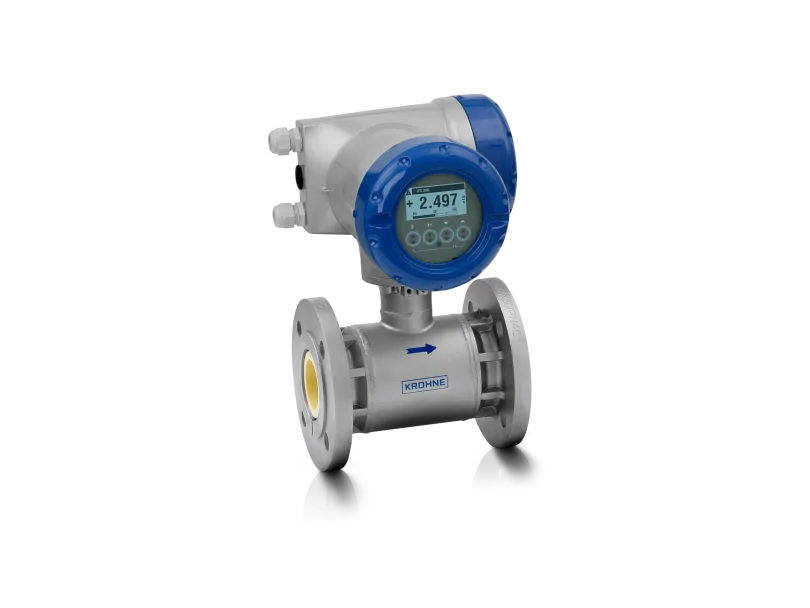
For raw wastewater flow measurement, in compliance with the DWA-A 131 standard, the KROHNE OPTIFLUX electromagnetic flowmeter is one of the most reliable instruments. It allows you to maintain the sludge age required by the standard with mathematical precision and constantly monitor the returned activated sludge, ensuring the process continuity demanded by the DWA.
Furthermore, OPTIFLUX provides real-time data to the SCADA system, allowing you to prevent sedimentation tank overload and sludge washout. DWA-A 131 also applies to water containing commercial or agricultural additives. The internal lining of the OPTIFLUX is resistant to chemical compounds, ensuring long-term operation of the instrument (often 20+ years).
- DWA-A 226 (Small Plants, 1,000 – 5,000 PE): Intended for relatively small plants where the priority is operational stability and simple maintenance, rather than process complexity.
Sludge Age: ≥25 days (which ensures sludge stabilization).
Design: Similar to A 131, it is based on COD.
Phosphorus Removal: The standard includes specific instructions regarding reagent dosing and the placement of equipment (tanks, pumps).
SBR Technology: It describes in detail Sequencing Batch Reactors (SBR), where treatment stages occur sequentially in time within a single tank.
- DWA-A 222 (Very Small Plants, < 1,000 PE): Focused on rural-type settlements. In addition to activated sludge systems, it considers stabilization ponds and constructed wetlands.
VI. Specifics of SBR Technology
DWA-M 210: This standard regulates SBR (Sequencing Batch Reactor) systems. Parallel to biological calculations similar to A 131 (sludge age, oxygen consumption), M 210 considers not only the tank volume but also the duration of the treatment cycle.
- Note on Technological Advantage: Many SBR systems on the market operate with fixed-time control, which cannot respond to changes in flow. DWA-M 210, however, prefers load-dependent cycles (using water level sensors), a method utilized by the company ATB Water. This ensures full compliance with the standard.
VII. Standardization of Data
DWA-A 198: This document unifies symbols and definitions (for plants >50 PE). It provides the “golden numbers” — standard loads per capita (PE), which are crucial for accurate design when real measurements are unavailable.
Standard Daily Load (per 1 PE):
- Water Consumption: 110-130 l/day.
- COD (Chemical Oxygen Demand): 120 g/(PE·day).
- BOD5 (Biochemical Oxygen Demand): 60 g/(PE·day).
- Nitrogen (TKN): 11 g/(PE·day).
- Phosphorus (P): 1.8 g/(PE·day).
VIII. Additional Specialized Standards Phosphorus Removal
- DWA-A 202: Defines chemical and physical methods (sedimentation/flocculation). It provides guidelines on agent dosing and sludge production.
To avoid incorrect reagent dosing, the use of the HACH online analyzer – Phosphax sc – is highly effective. The latter measures orthophosphate concentrations in real-time, which is essential for controlling dosing pumps.
Additionally, due to their cost, coagulants require precise accounting, which can be measured using the KROHNE BATCHFLUX 5500 specialized electromagnetic flowmeter for chemical reagent dosing. The device withstands aggressive chemical substances and measures even very small doses with high precision.
Aeration and Energy Efficiency:
- DWA-M 229: Defines Oxygen Transfer Efficiency (SOTE), the alpha-factor, and minimum mixing power.
To calculate SOTE, it is essential to determine exactly how much air is supplied to the system. One of the best solutions for this is KROHNE’s OPTISWIRL (vortex technology) or OPTIMASS (Coriolis mass) flowmeters, which allow for the precise measurement of mass air flow.
- DWA-A 216: Used for energy consumption auditing and optimization of operational costs.
To calculate energy efficiency, it is essential to precisely determine the volume of water and sludge the pump moves per every kilowatt consumed. KROHNE’s
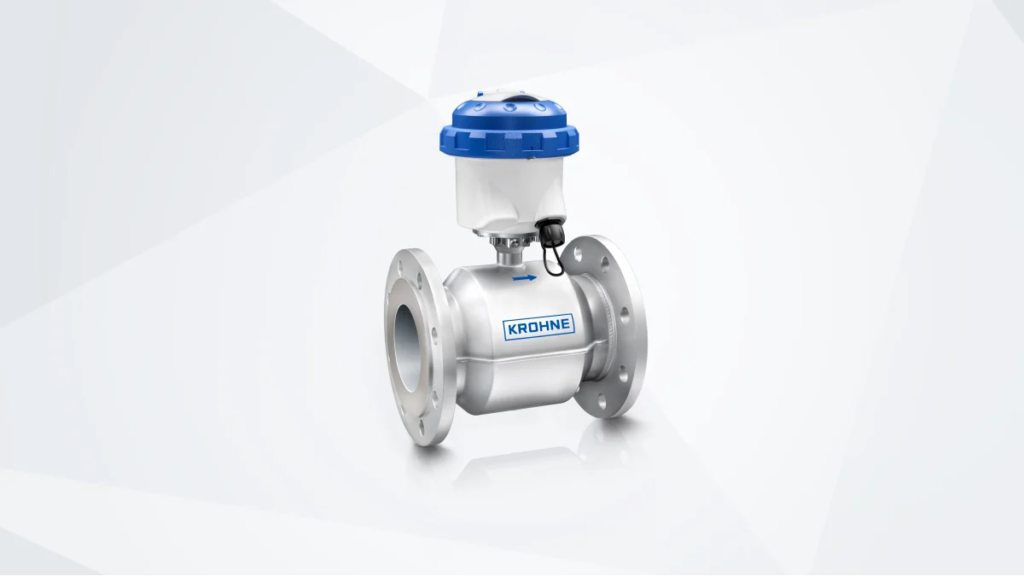
To calculate energy efficiency, it is essential to precisely determine the volume of water and sludge the pump moves per every kilowatt consumed. KROHNE’s WATERFLUX 3070 electromagnetic flowmeter meets the DWA-A 216 requirement for accurate flow measurement during both peak and nighttime hours. Samson Group valves, in turn, ensure precise regulation of the aeration flow, which is one of the key recommendations of the aforementioned standard.
Hydraulics and Construction:
- DWA-A 117: Establishes the dimensions for storm-water retention basins to prevent sludge washout during heavy rainfall. Consequently, it is essential to calculate the precise water flow during peak loads.
KROHNE’s TIDALFLUX 2300 measures water flow even in partially filled pipes, making it ideal for storm-water basins where water levels constantly fluctuate during rain. For continuous monitoring of water levels in retention basins, the same brand’s OPTISOUND ultrasonic meter is used to ensure timely flow redirection.
- DWA-A 166: Sets requirements for concrete structures (e.g., use of special cement) to prevent corrosion and damage.
Comparative Analysis of German and EU Standards
- Key Differences: Framework Directive vs. Engineering Precedent – While the EU “Water Framework Directive” (WFD – 2000/60/EC) establishes general objectives for achieving ecological status, German standards (AbwV and DWA) provide strict technical regulations to fulfill these goals. DWA standards often serve as the precursor to legislation adopted across the EU and are considered the industry’s “gold standard.
- Technical Requirements and Parameters
| Indicator | EU Directive (91/271/EEC) | German Standards (AbwV / DWA) |
| Design Logic | Often based on BOD5 (Biochemical Oxygen Demand) | Exclusively on COD (Chemical Oxygen Demand). Since 2016, DWA-A 131 and A 226 standards require plant dimensioning based solely on COD, allowing for more precise mass balance calculations. |
| COD Limits | Standard limit is 125 mg/l. | Stricter. Depending on plant size, requirements range between 75–110 mg/l. DWA-A 198 establishes precise loading (120 g/PE·day), eliminating “approximate” design. |
| Phosphorus (P) | Required only in “sensitive areas” (usually 1.0–2.0 mg/l). | Mandatory and Regulated. DWA-A 202 details chemical precipitation and flocculation methods, dosing, and sludge management. Even for small plants (1,000-5,000 PE), phosphorus removal is increasingly mandatory. |
| Monitoring | Focused on 24-hour composite samples. | Qualified Random Samples. The German approach often utilizes 2-hour interval checks, which is much stricter as it captures peak loads rather than just an averaged figure. |
| Micropollutants | Historically unregulated (revised in 2024) | “Fourth Stage.” Germany leads in technologies for removing pharmaceutical residues (ozonation, activated carbon), which is part of complex engineering management for large plants (>5,000 PE). |
3. Vision for Future: Energy Neutrality and Resource Recovery The modern German approach considers wastewater not as waste, but as a resource.
- Energy Efficiency: The DWA-A 216 standard was specifically developed for auditing the energy consumption of treatment plants, aiming to optimize operational costs and achieve energy neutrality.
- Phosphorus Recovery: According to the Sewage Sludge Ordinance (AbfKlärV 2017), large operators (>50,000 PE) will be required to recover phosphorus from sludge (if the content is >20g/kg). This regulation is a precursor to the EU’s circular economy principles.
Conclusion The German model demonstrates that sustainable results are achieved through dynamic standards. For instance, in SBR technology, DWA-M 210 requires cycles dependent on real load (water levels) rather than fixed time, turning technological progress into a mandatory norm. For Georgia, which is implementing water resource management reforms, this experience serves as the best guide for unifying environmental protection and efficient resource utilization.