Introduction
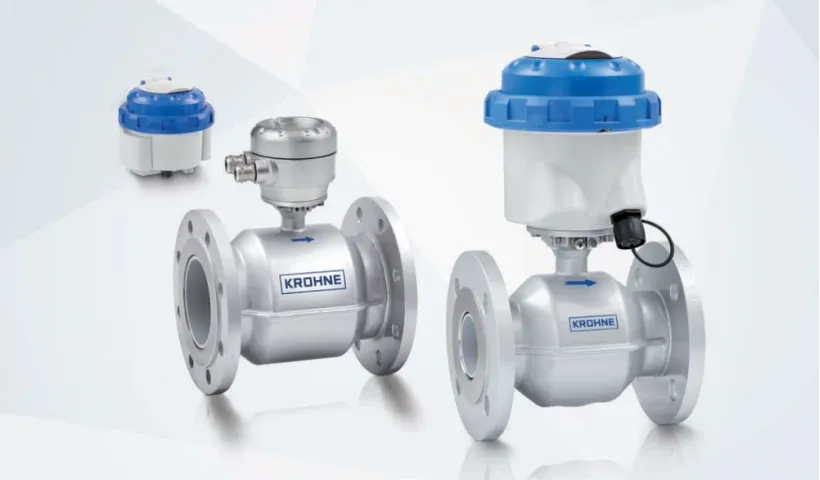
The KROHNE WATERFLUX[1] is a high-precision electromagnetic flowmeter optimized for water abstraction wells, District Metered Areas (DMA), and the commercial custody transfer of drinking, process, or wastewater. With integrated pressure and temperature sensors, it is ideal for the timely identification of network leaks and efficient pressure management. Thanks to its innovative design, the meter requires no straight inlet or outlet piping runs (0D/0D installation), while its internal battery ensures up to 15 years of continuous, autonomous operation.
One of the main challenges in Georgia's municipal and industrial water supply networks is high water losses (NRW - Non-Revenue Water), which are often caused by outdated infrastructure, hydraulically unsuitable pipeline diameters, and unstable power supplies at remote facilities (e.g., intake structures). Even in such difficult operational environments, WATERFLUX is guaranteed to maintain accuracy in compliance with legal metrology, significantly reducing capital expenditure on installation and ensuring reliable system monitoring.
In this blog, we will discuss in detail the technological advantages, full technical specifications, and certificates of the KROHNE WATERFLUX. In addition, we will share specific engineering solutions on how this model is considered an optimal tool for municipal utility companies to increase operational efficiency.
Product Technical Overview
An Alternative to Mechanical Meters: Unlike traditional mechanical flowmeters, WATERFLUX contains no moving parts, which completely eliminates the need for maintenance and provides an extremely wide measuring range. Thanks to the IP68 protection standard, the device can be installed via direct burial in the ground or in permanently flooded engineering chambers with high humidity.
Faraday's Law and Traditional Limitations: Although standard electromagnetic flowmeters are also based on Faraday's law of electromagnetic induction (where the voltage induced in a conductive liquid is directly proportional to the flow velocity), hydrodynamic turbulence and profile asymmetry in traditional round pipes severely degrade measurement accuracy. To compensate for this, long, straight inlet and outlet sections (at least 5D/2D) must be maintained.
Engineering Advantages of the Rectangular Cross-Section: In response to this challenge, WATERFLUX utilizes an innovative, narrowed measuring tube with a rectangular cross-section. This transformation of hydraulic geometry provides three critical advantages:
- Flow Profile Stabilization: The rectangular cross-section straightens the velocity profile before it reaches the electrodes. This ensures a much stronger, homogeneous signal and reduces sensitivity to turbulence by 80% compared to round pipes. At the same time, the concentrated design sharply increases the intensity of the magnetic field, allowing ultra-low flow velocities to be measured with high precision ($\pm1\text{ mm/s}$).
- Near-Zero Hydraulic Resistance and Energy Efficiency: Despite the narrowing of the cross-section, thanks to the optimized hydrodynamic design, the pressure drop in the pipeline is virtually zero (averaging 0.024 Bar on a DN100 diameter pipe). This feature eliminates energy losses in the system and additional load on pumping units. According to engineering and economic calculations, the additional operational expenditure (OPEX) for electricity required to overcome the minimal hydraulic resistance created by the integrated WATERFLUX meter on a DN100 pipeline is only 11.4 GEL per month, representing the highest standard of energy efficiency for municipal and industrial networks.
- 0D/0D Installation During Spatial Constraints: The meter requires no straight inlet or outlet sections whatsoever. It can be installed directly downstream of elbows, control valves, and pumps, making it an ideal solution for modernizing existing infrastructure with small dimensions.
.webp)
Key Design Advantages
- No moving parts – no wear and tear, creates no mechanical obstruction to the flow, and requires virtually no maintenance.
- Wide turn-down ratio up to 1000:1 – ensures exceptional accuracy when measuring low flows and night-time consumption.
- Rilsan® (Polyamide 11) internal lining – resistant to corrosion and wear, certified for contact with drinking water.
- High-tech reference electrode design – eliminates the need for grounding rings for diameters DN25–300.
- IP68 protection class sensor – withstands submersion in water up to 10 meters, ideal for flooded wells and direct burial in the ground.
- Integrated pressure and temperature sensors (optional, DN50–200) – for leak detection and pressure management.
- Bi-directional measurement – effective for detecting reverse flow, as well as monitoring leaks and pipe bursts.
Multi-Functional Measurements and Multi-Phase Operation
The WATERFLUX series combines the simultaneous monitoring of several parameters, which reduces capital expenditure (CAPEX):
- Integrated Pressure and Temperature: Additional sensors built into the meter allow for the simultaneous control of flow, pressure, and temperature, providing a complete picture of the hydraulic processes occurring in the network and used in pressure management systems.
- Improved Electrical Conductivity Measurement: With an exceptionally fast response time, the device instantly detects changes in water quality or instances of pipe emptying.
- Multi-Phase Operation: This feature ensures stable, repeatable, and reliable readings even in conditions where solid particles or gas bubbles (entrained gases) are introduced into the technological process, which completely paralyzes the operation of other types of meters.
Remote Data Monitoring Platform
Efficient management of water resources increasingly requires not only accurate measurement but also the timely availability of data. This issue is equally important for water supply operators managing the water and wastewater infrastructure of Tbilisi and other cities in the country, as well as for the National Environmental Agency, whose functions include the monitoring of water resources and the development of quantitative accounting systems.
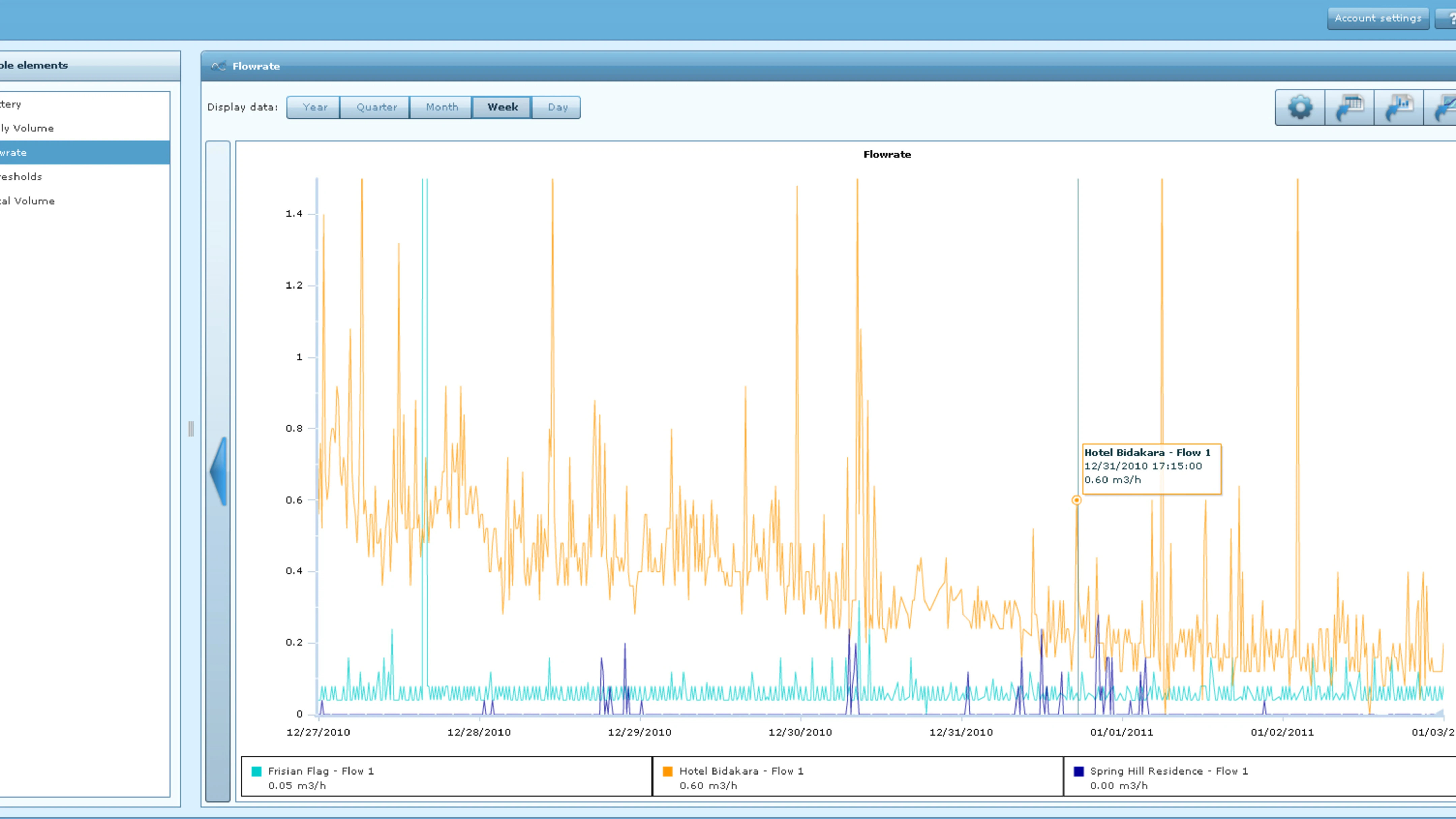
In this context, measuring devices are gradually becoming part of the digital data infrastructure. The KROHNE WATERFLUX 3070 is one such technology. One of its important features is the possibility of remote data transmission and integration with external monitoring systems. The device supports Modbus-based communication and can be integrated into SCADA, telemetry, and cloud platforms, allowing operators to receive information (water flow, temperature, pressure) in real time.
For water supply companies, this can mean better network visibility and additional opportunities for water loss assessment, while for regulatory and environmental agencies, it means a more structured database for the analysis of water abstraction, consumption, and resource management.
International practice shows that the digitalization of the water sector often begins with reliable measurement and continues with automated data transmission. In this respect, the WATERFLUX 3070 can be viewed as a representative of the category of technologies that combines metrological accuracy, compliance with international standards (OIML R49, MID MI-001), and online data availability. Such systems may play an important role in the future process of transparent, data-driven, and sustainable management of Georgia's water resources.
.webp)
Technical Specifications
|
Parameter |
Specification |
|
Measuring Principle |
Electromagnetic (Faraday's Law), rectangular reduced cross-section flow tube |
|
Nominal Diameter (flanged) |
DN25–600 (certified for commercial custody transfer up to DN600) |
|
Measurement Accuracy |
0.2% of measured value 1mm/s (DN25–300); 0.4% of measured value 1mm/s (DN350–600) |
|
Flow Velocity |
-12 ... +12 m/s |
|
Operating Temperature |
-5…+70°C / +23…+158°F |
|
Operating Pressure |
Standard 16 bar; special design up to 63 bar |
|
Pressure Loss |
< 10 mbar at typical network flow (~1 m/s); max. 500 mbar at 8 m/s velocity (630 mbar allowed by OIML) |
|
Required Straight Sections (Inlet/Outlet) |
0D / 0D – installation is possible directly adjacent to elbows, valves, and reducers |
|
Sensor Internal Lining |
Polyamide polymer 11 (Rilsan®) |
|
Electrodes |
Hastelloy / stainless steel, specially designed electrode (no grounding rings required for DN25–300) |
|
Protection Class |
IP68 (NEMA 4X/6P) – withstands submersion in water up to 10 meters, direct burial in the ground is possible |
|
Power Supply |
Internal batteries (up to 15 years); optional FlexPower external unit (110–230 V AC or 10–30 V DC – mains, solar, or wind power) with battery backup |
|
Communication |
Modbus RTU (RS485), pulse and status ports, optional GPRS/3G data logger for remote telemetry, 4-20 mA |
|
Optional Sensors |
Integrated pressure and temperature sensors (wetted parts made of 316L steel), DN50–200 |
|
Legal Metrology Compliance |
MI-001, MI-004, OIML R49 |
|
Water Quality Certificates |
DVGW, NSF, TZW, KTW, WRAS, KIWA, ACS |
|
Verification |
OPTICHECK – on-site metrological verification in Georgia by the manufacturer's certified technicians |
Metrology and Certification
The KROHNE Waterflux meets the strictest metrological standards[2] of Germany and the European Union. In Germany, for commercial accounting and legal metrology, compliance of water meters with the MID MI-001 and OIML R49 standards is a technical and legal requirement of the MessEG (German Federal Weights and Measures Act). This ensures the accuracy and stability of the device, which is an essential condition for the legal accounting of water consumption in Germany.
- MID is the European Union's "Measuring Instruments Directive", official number 2014/32/EU, while OIML is the International Organization of Legal Metrology.
- OIML R49 is the primary international standard for drinking water meters, which defines metrological and technical requirements and is considered equivalent to ISO 4064-1. These requirements are verified in accordance with the European Union's Measuring Instruments Directive, MID, in this case with the MI-001 module.
Compliance of the devices with MID requirements is provided by the conformity assessment service of the Physikalisch-Technische Bundesanstalt (PTB) — Germany's national metrology institute.
- WATERFLUX 3070 is certified in accordance with the standards of OIML R49 and the MID MI-001 annex. Waterflux is certified with OIML R49 Class 1 and Class 2 accuracy, ensuring error-free readings under any flow variations.
- WATERFLUX 3070 holds an approval issued by the PTB. PTB testing confirms that the instrument maintains accuracy even under extreme conditions (e.g., influence of magnetic fields, temperature fluctuations).
- German and European metrological certificates (MID/PTB) are a legal guarantee that the instrument's readings are officially recognized.
Fields of Application
- Raw, process, drinking, and wastewater.
- District Metered Areas (DMA) and district water balance generation to reduce commercial and technical losses.
- Commercial accounting and billing between municipalities, large suppliers, and industrial consumers.
- Water abstraction and deep wells, as its autonomous battery operation eliminates the need for a central power supply.
- Pressure management and leak detection via integrated pressure and temperature sensors.
- Irrigation systems and agricultural water distribution.
- Flow accounting for reservoir inlets/outlets and treatment plant inlets/outlets.
Relevance for Georgia
From September 2026, a new law[3] on water resources management will come into force in Georgia, and the law "On Water" adopted in 1997 will be declared invalid. The new bill, which aims for the integrated management of water resources, brings Georgia's water management policy closer to best international practices and is in line with the principles established in the European Union.
- According to the law, water abstraction of more than 15m3 per day from a surface body will be considered a significant impact on the state of the water body, for which companies will be obliged to obtain a special water abstraction permit[4] or a combined water abstraction and discharge permit.
- Additionally, state accounting is mandatory for entrepreneurial physical and legal entities if more than 1m3 of water per day is abstracted from a water body.
The new control of water resources places new obligations on businesses, but it also creates a certain challenge for the state — to ensure high-precision measurement with devices whose recalibration and data falsification will be virtually impossible.
The KROHNE Waterflux eliminates human manipulation. The metrological parameters of the flowmeter are protected both by software passwords and audit logs, as well as by a physical sealing mechanism. The user has no capability to arbitrarily change, delete, or reduce the displayed flow. Additionally, modern digital interfaces of the Waterflux (Modbus, Pulse) easily integrate into remote transmission (telemetry) and SCADA systems. This ensures that the collected data is delivered to regulatory or state supervisory agencies in real time, in its original and unaltered form, completely eliminating the risk of data falsification.
Conclusion
Ultimately, the KROHNE WATERFLUX represents a powerful engineering tool for water loss minimization and network optimization. Its rectangular geometry (0D/0D installation), the absence of a need for grounding rings, autonomous power alternatives (solar and wind energy), and supreme metrological certificates make it an indispensable asset for any modern water utility company, supervisory agency, or industrial facility.
Sources
[1] - KROHNE Electromagnetic Flowmeter WATERFLUX
[3] - How Water Resources Management Is Changing in Georgia: A Comparison of the Old and New Laws