When discussing the climate crisis, water is traditionally considered a resource impacted by this process, manifesting in droughts, floods, and the depletion of drinking water resources. However, scientific research in recent years has revealed that water can play a significant role in the fight against climate change.
The process of combating greenhouse gas emissions and biodiversity loss is at a critical stage. The Paris Agreement goal of limiting temperature rise to 1.5°C above pre-industrial levels appears increasingly unattainable. At the same time, water is gaining a strategic role in the fight against the climate crisis. The creation of the "Water Pavilion" after COP26 in 2021 was a pivotal step. Since then, the integration of the water cycle into climate change mitigation and adaptation strategies has increased. Water and wastewater infrastructure is globally responsible for 2% of greenhouse gas emissions. However, reducing emissions alone is not enough in combating the climate crisis; for this, efficient water management is of great importance, and it must be viewed not as a victim of climate change, but as an active agent in addressing it.
Water consumption is linked to all key areas of human activity, such as energy, agriculture, ecosystems, cities, and more.
Water is a critically important factor for the efficiency of renewable energy. For example, Bioenergy with Carbon Capture and Storage (BECCS)—often considered a key pathway to achieving net-zero emissions—requires large amounts of water for irrigation and processing, which could become a source of conflict in water-scarce regions. Even technologies such as geothermal, concentrated solar, or nuclear energy require water for cooling systems, so their efficiency in fighting climate change must account for their impact on water resources.
Sanitation is also a source of greenhouse gas emissions. Recent studies have shown how significant a role sanitation can play in reducing emissions. Water treatment systems account for 5% of global methane emissions, and new research has revealed high levels of methane, carbon dioxide, and nitrous oxide from sanitation systems commonly used in low-income countries.
The question arises: how can we create water infrastructure that simultaneously reduces pollution, energy consumption, and greenhouse gas emissions?
This is where two important directions intersect—the pursuit of zero pollution and climate-neutral water infrastructure.
Zero Pollution
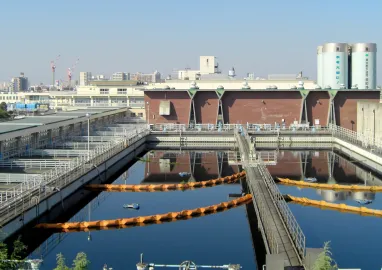
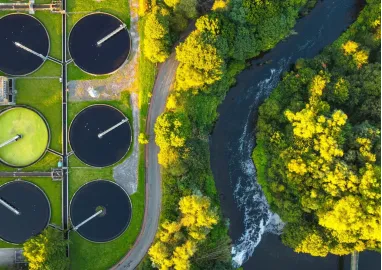
Zero pollution does not mean simply treating wastewater. The modern approach involves pollution prevention, efficient resource utilisation, and reducing environmental impact at every stage of the water cycle.
Modern water systems should operate as integrated resource management systems where treated water, energy, nutrients, and other resources are utilised as efficiently as possible.
For this, it is essential to:
- Reduce water losses;
- Control pollution sources;
- Implement energy-efficient technologies;
- Ensure efficient wastewater treatment;
- Reuse treated wastewater;
- Recover valuable resources;
- Automate processes and enable real-time monitoring.
As a result, wastewater becomes an additional source of resources.
Climate Neutrality in Water Infrastructure
As mentioned above, the water sector contributes significantly to climate change. Extracting, pumping, transporting, treating, and disposing of water requires energy. Biological wastewater treatment processes can be particularly energy-intensive.
No quantum leap is needed to reduce emissions in the water sector, as relevant technologies already exist and are relatively easy to apply while complying with regulatory standards. Furthermore, innovative technologies are constantly emerging on the market, which means this sector has the opportunity to turn water management into one of the first sectors to undergo decarbonization.
Therefore, there is a need to automate the entire process, starting from energy consumption to process management and resource recovery.
For example, energy-efficient pumps, intelligent management systems, process optimisation, biogas or other energy resource recovery, and the integration of renewable energy can significantly help facilities reduce their energy and carbon footprints.
Wastewater can contain:
- Water — which, after treatment, can be reused in technical, industrial, or other appropriate processes.
- Energy — for example, in the form of biogas generated from the treatment of organic matter.
- Valuable resources — including nitrogen and phosphorus, which can be recovered and further utilized using appropriate technologies.
To achieve zero pollution and climate neutrality, technological solutions should be selected based not only on their initial cost but on their entire life cycle.
In a properly designed system, the following are important:
- Energy efficiency — less energy for the same or better results.
- Automation — precise control of processes and reduction of human error.
- Monitoring — continuous control of water quality, energy consumption, and process parameters.
- Modularity — system flexibility and the ability to expand if needed.
- Resource reuse — maximum return of treated water, energy, and other resources back into the cycle.
Ultimately, the most efficient water system is one that achieves maximum environmental results with minimal resources.
- Regulatory compliance: Environmental legislation in Georgia and the region is gradually aligning with European standards.
- Reduced operational costs: Energy efficiency and water reuse directly reduce utility and manufacturing expenses.
- ESG and corporate responsibility: Using sustainable technologies increases a company's investment attractiveness and reputation.
Therefore, water resource management should not be overlooked in the fight against climate change. Climate strategies will be effective and sustainable only if they account for the water factor. This requires changes in governance, policy documents, spatial planning, and investments in both new technologies and nature-based solutions.