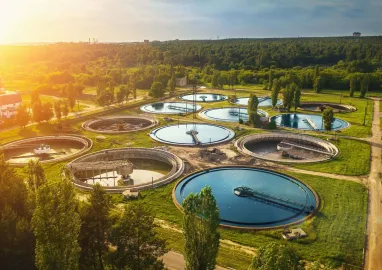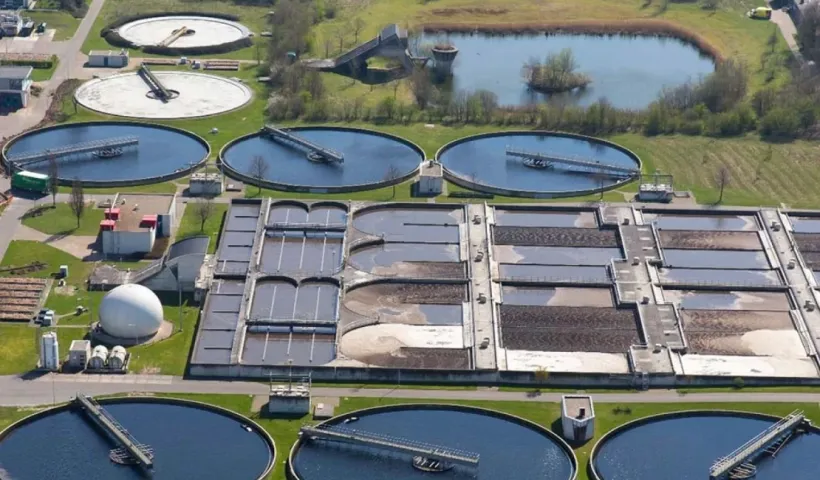
Today, wastewater management is one of Europe’s biggest environmental challenges. The EU Urban Wastewater Treatment Directive, adopted in 1991, served as the primary instrument for tackling this challenge and helped reduce water pollution across Europe. However, given that 35 years have passed since then, it requires revision.
Wastewater treatment plants in Europe face numerous challenges, including climate and energy neutrality ambitions, water scarcity, and microplastics. Therefore, for the first time since its adoption, the EU has reviewed and updated the document. The revised directive entered into force on January 1, 2025.
The updated version of the directive has a significant impact on more than 30,000 wastewater treatment plants across Europe. It introduces a range of new obligations to be implemented in phases, requiring resilient infrastructure and a stronger focus on circular economy principles.
In the process of harmonizing Georgia's legislation with EU regulations, the country will also have to ensure compliance with this directive. Work on the technical regulations for the new Water Law is currently underway in 2026. Accordingly, to ensure preparedness, it is crucial to incorporate the directive's principles into the new legislation so that the Water Law does not require future revision. Below are 5 key areas of the directive essential for ensuring compliance with its requirements.
1. Removal of Pollutants from Wastewater - Articles 6, 7, and 8
The updated version of the directive significantly raises the performance standards for treatment plants, expanding requirements from basic secondary treatment to a new quaternary stage. This multi-tiered upgrade demands tighter process control to achieve advanced wastewater purification under new discharge limits.
Expanded Secondary Treatment (Article 6)
The directive strengthens and broadens the scope of secondary treatment, meaning that starting in 2035, this requirement will apply to all agglomerations of 1,000 population equivalent (p.e.) or more.
Stricter Tertiary Treatment (Article 7)
Nutrient removal requirements (for nitrogen and phosphorus) are becoming stricter for all treatment plants with a capacity exceeding 10,000 p.e. These standards will be even more stringent for plants exceeding 150,000 p.e., measured both in milligrams per litre (mg/L) and by removal efficiency relative to the influent load.
New Quaternary Treatment (Article 8)
The directive mandates quaternary treatment for treatment plants of 150,000 p.e. and above, as well as for plants exceeding 10,000 p.e. in areas where an environmental or health risk is identified. This stage targets the removal of a broad spectrum of micropollutants.
2. Proactive Approach to Urban Stormwater
Stormwater overflows and urban runoff represent one of the primary sources of pollution, requiring a more holistic and proactive strategy to address. Article 5 of the directive mandates the active management of the entire urban drainage system through integrated planning.
EU Member States are required to establish Integrated Urban Wastewater Management Plans for the following types of settlements:
- All agglomerations of 100,000 p.e. and above, by 2033;
- Agglomerations between 10,000 and 100,000 p.e. where stormwater poses a risk to the environment or human health, by 2039.
According to Annex V of the directive, these plans serve as strategic roadmaps that:
- Aim to reduce pollution from storm overflows, setting an indicative target that overflows should account for no more than 2% of the annual collected load calculated in dry weather conditions.
- Prioritize preventive and nature-based solutions (green [nature-based] and blue [water-based] infrastructure) over the construction of traditional grey infrastructure. This will promote the adoption of a sustainable approach to urban water management.
3. The Path to Energy Neutrality and Net-Zero Emissions: Mandatory Requirement for a Climate-Neutral Water Sector
One of the goals of the new directive is to make the entire urban wastewater sector energy-neutral, transforming treatment plants from net energy consumers into key agents of the circular economy. This objective is defined in Article 11 and is based on two core principles:
-
Progressive National Targets: Member States must ensure at the national level that the total annual amount of renewable energy generated on-site or off-site by (or on behalf of) the owners or operators of urban wastewater treatment plants treating a load of 10,000 p.e. and above is equivalent to a progressively increasing share of the energy they consume annually. The timeline is set as follows:
-
20% of total energy consumption by 2030;
-
40% by 2035;
-
70% by 2040;
-
100% by 2045.
-
-
Mandatory Energy Audits: To achieve these targets, all treatment plants with a capacity exceeding 10,000 p.e. must undergo regular energy audits every 4 years. This procedure must identify cost-effective measures to reduce energy consumption and maximise the potential for renewable energy production.
This requires a strategic shift from basic regulatory compliance to proactive energy management, placing process optimization and resource recovery at the core of plant operations.
4. Enhanced Monitoring and Reporting Requirements: Digital Transformation
The new directive fundamentally transforms data management, requiring a transition from periodic reporting to a continuous digital data system. This principle is built upon three articles:
-
Article 21: Expanded monitoring for treatment plants exceeding 10,000 p.e., which includes:
-
Systematic monitoring of greenhouse gas emissions ($\text{CO}_2$, $\text{N}_2\text{O}$, $\text{CH}_4$);
-
Detailed accounting of data on energy consumption and renewable energy generation;
-
Monitoring of influent and effluent micropollutants to verify removal efficiency.
-
-
Article 22: Reporting, Static, biennial reports have been replaced. Member States must establish and regularly update standardized national databases for the European Environment Agency (EEA), streamlining the compliance process.
-
Article 24: Public Transparency, Key performance data regarding treatment efficiency, energy consumption, and operational costs must be made publicly available online in a user-friendly format.
5. Promoting Resource Recovery and Broader Societal Value
The new directive views wastewater treatment plants as agents of the circular economy and mandates a strategic shift from waste disposal to resource recovery. This is not an optional step, but a mandatory requirement:
- Article 20, Mandatory Recovery of Nutrients from Sludge: Sludge must be transformed from waste into a valuable source of nutrients. A key change is the introduction of minimum combined reuse and recycling rates for phosphorus from sludge and wastewater, which reduces dependence on imports and supports agricultural sustainability.
- Article 15, Systematic Promotion of Water Reuse: Member States must systematically promote the reuse of treated wastewater, particularly in water-scarce regions. This serves as a core strategy to reduce freshwater abstraction and increase resilience to water scarcity. Compliance with the existing Water Reuse Regulation (EU 2020/741) must be ensured when reusing water for agricultural irrigation.
- Articles 9 and 10, Strengthening Pollution Prevention and Control: Reinforcing the "polluter pays" principle, the directive introduces Extended Producer Responsibility (EPR), placing financial responsibility on pharmaceutical and cosmetic producers for the removal of micropollutants. Additionally, it establishes stricter controls over industrial wastewater (Articles 14 and 16), applying tighter monitoring and regulation to non-domestic/industrial discharges to prevent harmful substances from impacting the treatment process at the source.
- Article 17, A New Role in Public Health Surveillance: Wastewater treatment plants are officially recognized as vital instruments for public health. The directive requires the establishment of a national wastewater surveillance system to monitor viruses (such as SARS-CoV-2 and poliovirus) and other health parameters, ensuring an effective early-warning system to prevent potential epidemics.
- Article 19, Obligation to Ensure Social Equity and Access: A social dimension has been added to the directive, obligating Member States to ensure access to sanitation for all, particularly for vulnerable and marginalized groups, as well as improved access in public spaces.
Requirements of the EU Urban Wastewater Treatment Directive in the context of stormwater, energy and climate management, and reporting:
| Category | Requirement / Parameter | Articles | Plant Capacity (p.e.) | Target / Limit Value | Final Deadlines |
| Treatment Requirements | Secondary Treatment (BOD, COD, Total Suspended Solids) | 6, 7, 8 | greater than 2,000 |
BOD5: 25 mg/L O2 and 70–90% reduction COD: 125 mg/L O2 and 75% reduction Total Organic Carbon (TOC): 37 mg/L and 75% reduction Total Suspended Solids (TSS): 35 mg/L and 90% reduction (optional) |
By 2035–2049 (accounting for existing infrastructure, country-specific conditions, and other factors under various scenarios and derogations). |
| Tertiary Treatment (Total Nitrogen, Total Phosphorus) | greater than 150,000 |
Total Nitrogen: 8 mg/L and 80% reduction Total Phosphorus: 0.5 mg/L and 90% reduction |
Phased: 2033, 2036, 2039 | ||
| 10,000 – 150,000 (in sensitive areas) |
Total Nitrogen: 10 mg/L and 80% reduction Total Phosphorus: 0.7 mg/L and 87.5% reduction |
Phased: 2033, 2036, 2039, 2045 | |||
| Quaternary Treatment (Micropollutants) | greater than 150,000 | 80% reduction | Phased: 2033, 2039, 2045 | ||
| 10,000 – 150,000 (in risk areas) | 80% reduction | Phased: 2033, 2036, 2039, 2045 | |||
| Stormwater Management | Integrated Management Plans | 5 | greater than 100,000 | N/A | 2033 |
| 10,000 – 100,000 (in risk areas) | N/A | 2039 | |||
| Overflow Reduction Target (Indicative) | greater than 100,000 | ≤ 2% of annual dry-weather collected load | 2039 | ||
| 10,000 – 100,000 (in risk areas) | ≤ 2% of annual dry-weather collected load | 2045 | |||
| Energy and Climate | Energy Neutrality (Nationally determined target) | 11 | greater than 10,000 |
20% renewable energy 40% renewable energy 70% renewable energy 100% renewable energy |
2030 2035 2040 2045 |
| Energy Audits (Every 4 years) | 11 | greater than 100,000 | N/A | First audit by 2028 | |
| 10,000 – 100,000 | N/A | First audit by 2032 | |||
| Greenhouse Gas Monitoring ($\text{CO}_2$, $\text{N}_2\text{O}$, $\text{CH}_4$) | 22 | greater than 10,000 | Monitoring and reporting | Database established by 2030 | |
| Governance and Reporting | Extended Producer Responsibility | 9, 10 | N/A | Producers cover ≥ 80% of quaternary treatment costs | System implemented by 2028 |
| Digital Databases | 22 | greater than 1,000 | Standardized national reporting | First databases established by 2028 |
Turning Regulations into Opportunities
The new Urban Wastewater Treatment Directive raises the bar for treatment plant operators across treatment process performance, compliance with climate and energy targets, stormwater management, monitoring, reporting, and resource recovery.
This requires not only upgraded infrastructure, but also improved, deeper analytics. Digital technologies—such as Veolia’s Hubgrade Wastewater Plant Performance real-time control system—help operators:
- Regain full visibility into plant operations from inlet to outlet, enabling them to act proactively rather than only reacting when an alarm or non-compliance occurs;
- Minimize the need for large-scale capacity expansion by intensifying and optimizing existing treatment processes;
- Continuously identify optimization opportunities by combining real-time data, deep process knowledge, and advanced artificial intelligence to pinpoint inefficiencies and levers for improvement;
- Optimize aeration, chemical dosing, and sludge management systems to lower energy consumption and reduce operational costs while improving effluent water quality.
The goal of all this is to simplify the process and turn a lengthy directive into a clear roadmap tailored to wastewater treatment plants, which in the long term will also benefit existing treatment facilities in Georgia. On top of these benefits, adopting advanced technologies at an early stage helps plant operators avoid both the risk of regulatory non-compliance and major future financial costs associated with replacing outdated technologies.