Category: Uncategorized
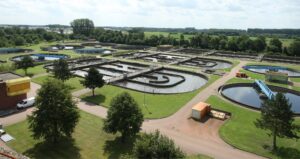
The German “Gold Standard” in Wastewater Management: Legislation, Technology, and Practice
German wastewater treatment legislation is globally recognized and considered one of the most stringent and technically advanced systems. It is structured into two primary levels: Legislative Framework The uniqueness of the German approach lies in the principle of “State of the Art (Stand der Technik).” This means that the law requires the use of the […]
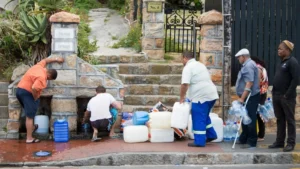
How Cape Town Defeated the Water Crisis: A Blueprint for Resilience
In 2018, Cape Town was teetering on the edge of a catastrophe known as “Day Zero” — the moment when, for the first time in modern history, a major global city’s water supply would run completely dry, leaving over 4 million people without running water. However, instead of surrendering, the city met the disaster with […]
A Comprehensive Guide to International and German Standards for Water Flow, Analytical, and Quality Instrumentation Manufacturers
Introduction The new Water Law in Georgia will come into force in September 2026, laying the foundation for harmonising the country’s water policy with the best international and European Union practices. The enforcement of the bill is directly dependent on the technical regulations that must be operational by September 1st and must also comply with […]
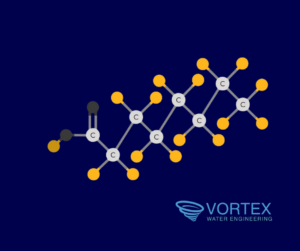
Monitoring of PFAS in Drinking Water Has Become Mandatory in the European Union
According to the European Environment Agency, starting from January 12, 2026, based on the updated EU Drinking Water Directive (Directive (EU) 2020/2184), monitoring of PFAS in drinking water has come into force. PFAS—per- and polyfluoroalkyl substances—are a group of synthetic chemical compounds that, due to their resistance to water, fat, and stains, are used in […]
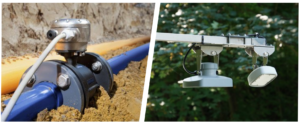
How to Ensure Accurate Water Metering and Protect Data Against Tampering
Starting from September 2026, water extraction of more than 15 m³ per day from surface water bodies will be classified as a significant impact on the state of the water body. Consequently, companies will be required to obtain a special water use permit. This new framework for water resource control imposes new obligations on businesses. […]
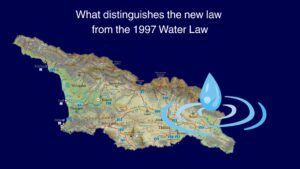
How Water Resources Management Is Changing in Georgia: A Comparison of the Old and New Laws
From September 2026, a new law on water resources management will enter into force in Georgia, while the 1997 Law on Water will be repealed. The new legislation aims to ensure the protection of water resources and their sustainable use. It brings Georgia’s water management policy closer to international best practices and aligns it with […]
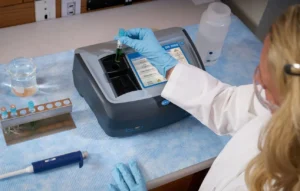
High-Precision Water Quality Control with HACH Spectrophotometers
As a global leader in water analytics, HACH offers a broad range of testing reagents and instruments, including advanced spectrophotometers. These devices measure the concentration of substances in water samples by analyzing light absorbance and transmission, ensuring the highest accuracy in water quality control. HACH spectrophotometers combine multiple water analysis methods, built-in error prevention, and […]
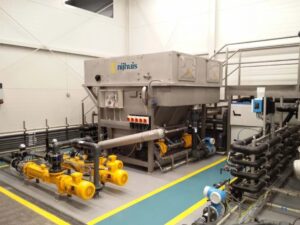
Sludge Treatment Best Practices: Nijhuis Saur Industries Solutions
In Georgia, an important part of wastewater management is often overlooked — sludge treatment, the inefficient execution of which can pose significant environmental risks. At the same time, modern modular solutions now make it possible to build safe and circular systems for effective sludge processing. The Dutch company Nijhuis Saur Industries (NSI) offers innovative and […]
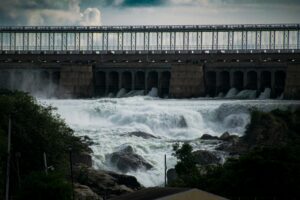
“Accuracy of Flow Measurement: Why You Should Choose KROHNE”
In every water-related industry—whether it’s food and beverage, chemicals, oil and gas, or energy production—the accuracy of flow measurement impacts a wide range of factors. These include costs, data reliability, safety, final product quality, and more. Accurate flow measurement ensures that the target levels of chemical dosing in water are maintained, balances energy consumption, guarantees […]
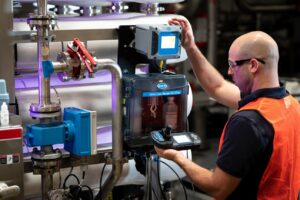
Water Quality Control in Real Time – Remote Monitoring Capabilities
In Georgia, the safety of drinking water remains one of the main challenges. The local technical regulations strictly define water quality standards, but ensuring compliance is difficult when relying only on periodic laboratory analyses. At the same time, modern water quality monitoring technologies make it possible to control water parameters in real time. In this […]