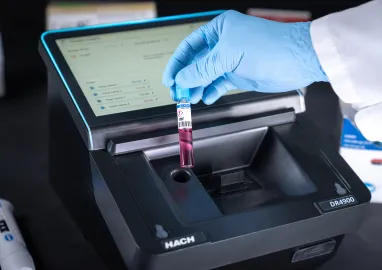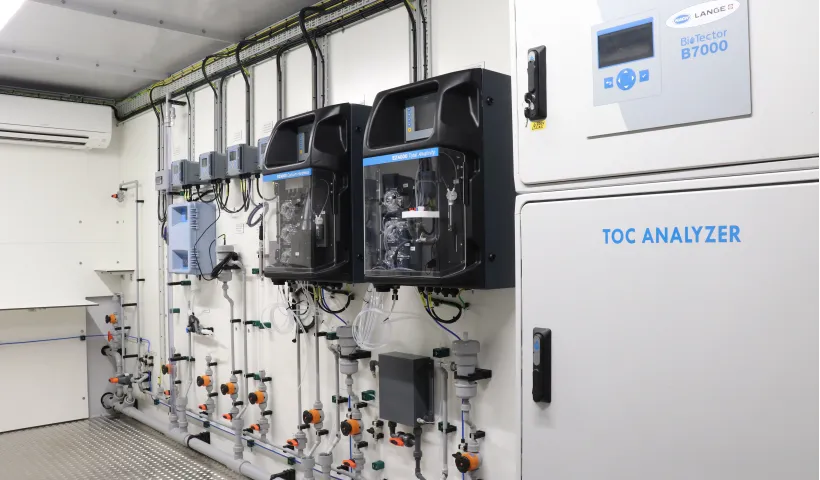
Along with the tightening of environmental supervision, keeping track of international water quality standards is a strategic necessity.
To improve environmental activities, the European Union is transitioning[1] from traditional Chemical Oxygen Demand (COD) to modern, Total Organic Carbon (TOC) and Total Bound Nitrogen (TNb) analytics for wastewater monitoring, which represents a significant change.
This transition serves not only to obtain more accurate data, but also to eliminate those significant environmental and safety obligations that accompany the traditional (COD) wastewater analytics method.
In some EU member states, measuring TOC under the ISO 20236 standard already became mandatory from January 1, 2026, while the remaining member states have until July 2026 to harmonize with national norms.
The Association Agreement with the European Union directly obliges Georgia to bring its water sector management principles closer to European directives. Therefore, for Georgia and Armenia, harmonizing legislation and technical regulations with these documents will be crucial in the process of European integration.
The COD Problem
The traditional COD method (DIN 38409-41) oxidizes organic matter using potassium dichromate, sulfuric acid, and mercury sulfate. This process creates an additional, permanent obligation and cost for municipalities and enterprises.
- The process generates toxic waste containing hexavalent chromium (Cr6+) and mercury. Both require specialized, expensive disposal.
- The accuracy of the method is limited because COD is sensitive to inorganic reducing agents (such as chlorides), which can show inaccurate results in high-salinity samples — a common occurrence in many industrial wastewaters.
- COD requires a long, two-hour digestion period, making the data useless for real-time process intervention.
Ultimately, the analytical process used in the COD method is slow and, in some cases, less reliable, while also generating toxic waste.
The New Standard: TOC/TNb
The DIN EN ISO 20236:2025 standard replaces wet chemical oxidation with high-temperature catalytic oxidative combustion, which allows for the simultaneous measurement of Total Organic Carbon (TOC) and Total Bound Nitrogen (TNb).
TOC analysis provides a more accurate and chemically justified measurement of actual organic content than COD.
Advantages of the method:
- Less environmental impact: does not require the use of chromium, mercury, and specialized waste, and consequently their subsequent disposal
- Fast results: instead of at least 2 hours in the case of COD, no more than 10 minutes for TOC.
- Higher accuracy: TOC directly measures carbon content, without interference from chlorides or other inorganic substances.
Comparative Analysis: Chemical Oxygen Demand (COD) VS Total Organic Carbon (TOC)
| Parameter | Traditional COD Testing (DIN 38409-41) | High-Temperature Catalytic Oxidative Combustion (ISO 20236:2025) |
| Use of Reagents | Reliance on toxic K2Cr2O7, H2SO4 and HgSO4. | Combustion without reagents; eliminates the accumulation of hazardous waste. |
| Analysis Time | ~2 hours (retrospective monitoring only). | <10 minutes (near real-time process control). |
| Measurement Accuracy | High interference from chlorides/inorganic substances. | Direct measurement of carbon; without any interference. |
This transition toward analytical accuracy is necessary for managing the increasingly complex and variable wastewater streams that characterize modern industrial operations.
What this transition means for environmental, municipal, and industrial processes
As mentioned above, unlike COD, this method does not generate toxic waste such as hexavalent chromium and mercury.
For environmental agencies, the transition to the TOC/TNb standard guarantees that the data provided by municipalities and enterprises will be accurate, free from manipulations and errors caused by chlorides. Furthermore, the new revision[1] of the European Municipal Wastewater Directive emphasizes energy neutrality and reducing the use of hazardous reagents. In wastewater treatment, during the biological purification stage, since TOC measures data in near real-time, it allows for the optimization of air compressor operations, creating an opportunity to reduce the electricity consumption of municipal stations by up to 30%.
HACH's BioTector B3500 and B7000
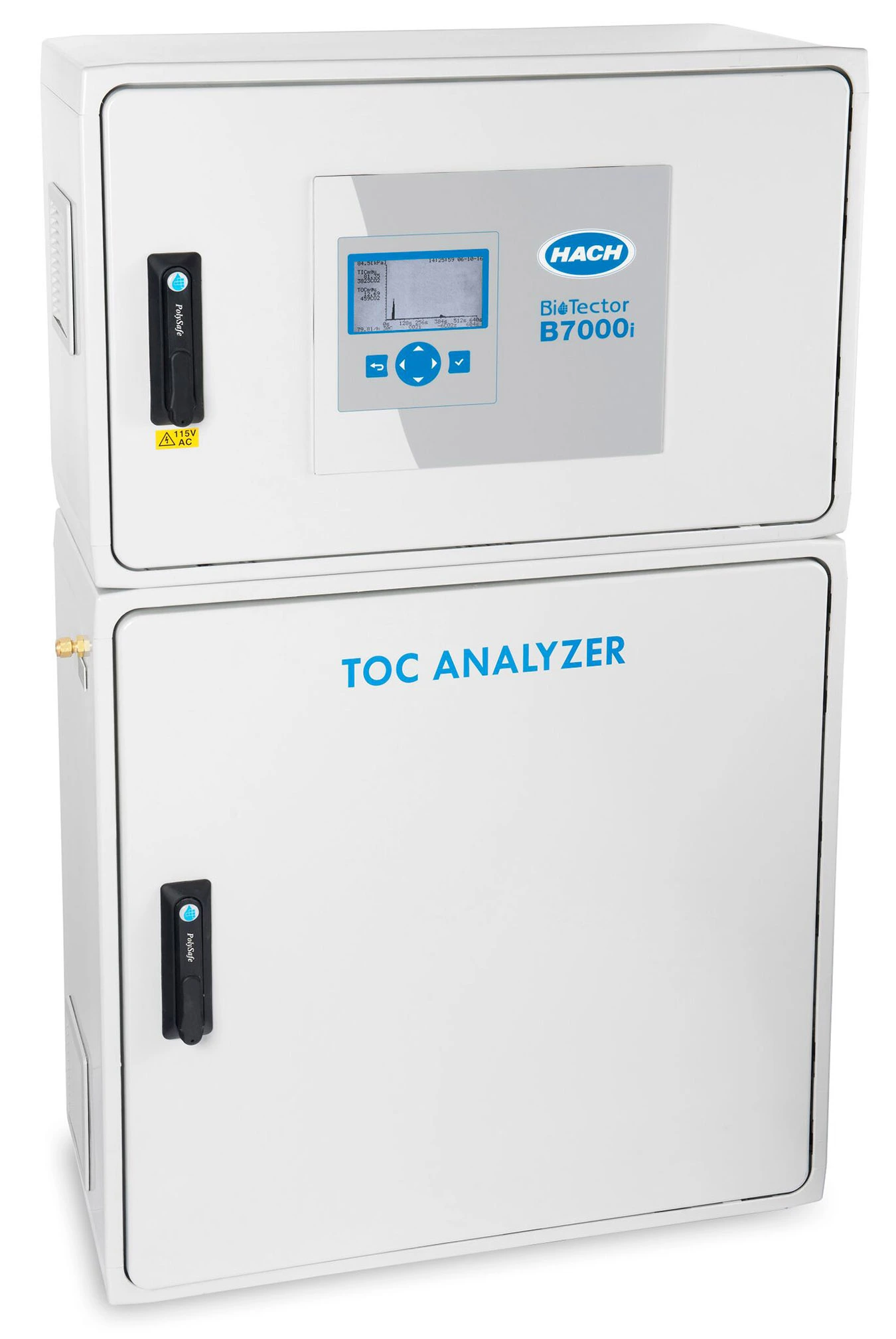
When it comes to industrial processes, standard combustion-based TOC analyzers in industrial environments frequently fail. The main reasons for this are sample contamination with salts, particles, fats, and oil products. Traditional TOC analyzers often cannot cope with this load, leading to inaccurate readings and expensive operational interventions.
This is precisely where HACH's Biotector B7000i[2] stands out. Its self-cleaning Two-Staged Advanced Oxidation (TSAO) technology is designed to work with complex samples containing sludge, fats, salts, and solid particles — without the need for filtration.
Unlike standard combustion, TSAO utilizes a liquid-phase oxidation process. The system generates highly reactive hydroxyl radicals (⋅OH) to oxidize organic substances at the molecular level. Biotector avoids the clogging and salt accumulation problems that constantly disrupt traditional systems.
For enterprises implementing TOC/TNb monitoring, using the Biotector offers several advantages:
- Non-thermal salt management: Thanks to liquid-phase oxidation, the system eliminates "salt meltdown," which typically destroys combustion crucibles.
- Self-cleaning capabilities: The wide-bore tubing design and oxidation chemistry allow the system to process particles up to 2 mm in size, significantly reducing pre-filtration requirements and maintenance frequency.
- Energy efficiency: The device's energy consumption is 5 times or more lower compared to standard, combustion-type TOC analyzers.
Engineering Recommendations
For facilities and technical teams planning this transition process, three priorities are identified:
- Begin the gradual replacement of COD-based monitoring to remove hazardous reagent liabilities and adopt the simultaneous TOC/TNb analysis method.
- Avoid standard combustion units in high-salt or coarse-particle environments. Use TSAO-based systems, such as the Biotector B3500 and B7000, to increase uptime and protect the system from catalyst poisoning of its components, as well as from the deposition of salts and other contaminants within the system.
- Utilize TOC's fast analysis time for proactive management of organic loading, to protect the biological treatment system, ensure its efficient management, and maintain compliance with wastewater technical regulations.
Conclusion
The goal of the transition from COD to TOC/TNb is to increase the efficiency of environmental activities, and it represents a structural change in the measurement and regulation of organic pollution. The timely implementation of this standard in Georgia will ensure legislative readiness in the process of European integration and improved, transparent, and high-tech environmental management.